
A boiler keeps losing pressure when water is escaping from the sealed central heating system, pressure has been lost after bleeding radiators, or a component such as the expansion vessel or pressure relief valve is not working correctly. The odd small adjustment is nothing to worry about. If you find yourself topping the system up week after week, there is almost always an underlying fault worth investigating, and it usually costs less to catch early than to ignore.
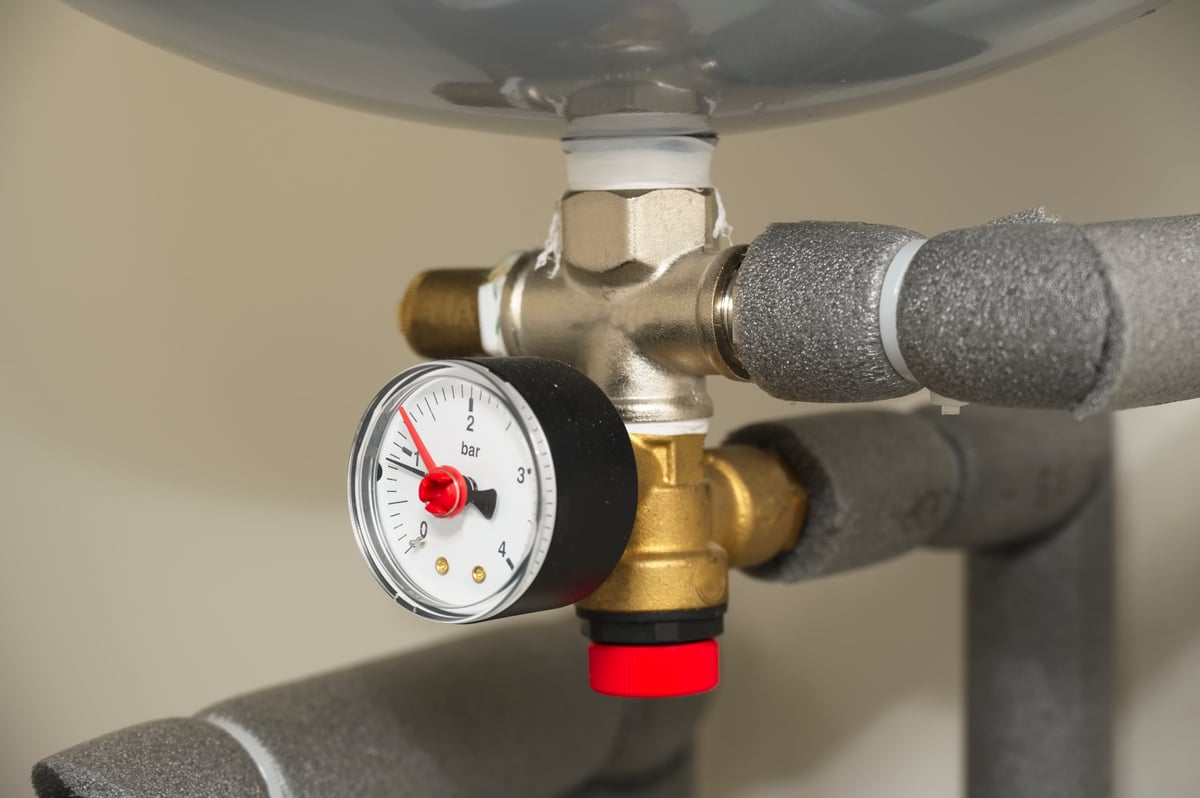
What causes a boiler that keeps losing pressure?
A boiler that keeps losing pressure is almost always losing water somewhere within the sealed heating system. Common causes include leaking radiator valves, pipework leaks, recently bled radiators, a pressure relief valve releasing water, expansion vessel problems or an internal boiler leak that may not be immediately visible.
| Possible cause | What you may notice |
|---|---|
| Radiator or valve leak | Dampness, staining or corrosion around the valve |
| Pipework leak | Damp patches, water marks or unexplained pressure loss |
| Radiators recently bled | Pressure falls shortly afterwards |
| Pressure relief valve problem | Water dripping from the external discharge pipe |
| Expansion vessel fault | Pressure rises sharply when hot, then falls |
| Internal boiler leak | Pressure drops with no obvious external leak |
| Hidden pipe leak | Persistent pressure loss with no visible water |
What should you do first if your boiler keeps losing pressure?
If your boiler keeps losing pressure, first allow the system to cool and check the pressure gauge against your manufacturer's instructions. Then look over accessible radiators, valves, visible pipework and the area around the boiler for signs of water. Avoid repeatedly topping the system up before you understand where the pressure is going.
- 1Turn the heating off and let the system cool.
- 2Check the boiler pressure gauge.
- 3Read the boiler manufacturer's instructions.
- 4Look around radiator valves and connections.
- 5Check accessible pipework for moisture.
- 6Look for staining on ceilings, walls or floors.
- 7Check whether the external discharge pipe is dripping.
- 8Consider whether radiators were recently bled.
Do not remove the boiler casing to search for a leak. For any fault that could involve the gas appliance, book a boiler repair with a qualified engineer.
Why does my boiler lose pressure when there is no visible leak?
A boiler can lose pressure without an obvious visible leak because the water loss may be tiny, hidden beneath floors or behind walls, or occurring inside the boiler itself. Expansion vessel problems and a pressure relief valve discharging externally can also cause pressure loss without leaving water inside your home.
- green or white deposits around radiator valves
- rust or corrosion
- flaking paint or swollen skirting boards
- marks on ceilings or damp flooring
- recurring low-pressure warnings
When a leak is genuinely hidden, specialist water leak detection can trace it before it causes structural or cosmetic damage.
Can bleeding radiators make boiler pressure drop?
Yes. Bleeding a radiator releases air and sometimes water from the sealed system, which can reduce boiler pressure. If pressure falls after several radiators have been bled, the system may simply need repressurising in line with the manufacturer's instructions. This does not necessarily mean the boiler is faulty. However, if you have to bleed radiators constantly because air keeps returning, that may point to a deeper heating problem worth investigating with radiator repairs. When only a single radiator fails to heat, our cold radiator guide covers the most common reasons and the right order to tackle them.
Why does boiler pressure rise when heating is on and then fall again?
If boiler pressure rises considerably while the heating runs and drops again after cooling, the expansion vessel may not be controlling pressure changes correctly. Excess pressure can also cause the pressure relief valve to discharge water, leaving the system too low once it cools.
| Reading | Pressure |
|---|---|
| Cold | 1.2 bar |
| Heating running | 2.8 bar |
| Cold again | 0.5 bar |
This swing is useful information to give your engineer. Do not attempt to repair or recharge an internal expansion vessel unless appropriately qualified; leave it to central heating repair specialists.
When should you call a heating engineer?
Call a heating engineer when your boiler pressure keeps dropping after being correctly repressurised, you cannot find the source of a leak, pressure changes dramatically between hot and cold, water is coming from the boiler, or the system repeatedly stops because of low pressure.
For gas boilers, work involving the gas appliance itself must be carried out by an appropriately qualified Gas Safe registered engineer. Under the Gas Safety (Installation and Use) Regulations 1998, any business carrying out gas work within scope must be registered. If you smell gas or suspect a leak, call the National Gas Emergency Service on 0800 111 999 immediately.
You can arrange a visit through our Gas Safe registered engineer service, or for an urgent breakdown, our emergency boiler repair team.
Frequently asked questions
Why does my boiler pressure keep dropping overnight?
Pressure dropping overnight may indicate a slow leak, pressure relief valve discharge or another heating system fault. Check the pressure when the system is cold and arrange an inspection if it repeatedly falls.
Can a boiler lose pressure without leaking?
A boiler can appear to lose pressure without a visible leak. Small concealed leaks, pressure relief valve discharge and internal boiler faults may cause pressure loss without leaving an obvious puddle.
Is 0.5 bar too low for a boiler?
For many sealed heating systems, 0.5 bar is below normal operating pressure. The correct pressure varies by boiler, so homeowners should follow the manufacturer's instructions for their model.
How often should boiler pressure need topping up?
Occasional adjustment may be normal, but frequently repressurising a boiler can indicate a leak or heating system fault and should be investigated by a qualified engineer.
Need help with a boiler that keeps losing pressure?
A boiler that continually loses pressure should not simply be topped up indefinitely. Our Gas Safe engineers can trace the cause and fix it properly across Bedfordshire, Hertfordshire, Buckinghamshire and North London.