
Why a burst pipe is an emergency you cannot ignore
Understanding what causes a burst pipe matters, because the consequences move fast. A fully split pipe can release several litres of water every minute, soaking ceilings, flooring, electrics and everything you own. Within half an hour the damage can run into thousands of pounds, and standing water quickly threatens the structure of your home. Knowing what to do first, in the right order, is the difference between a contained mess and a major insurance claim.
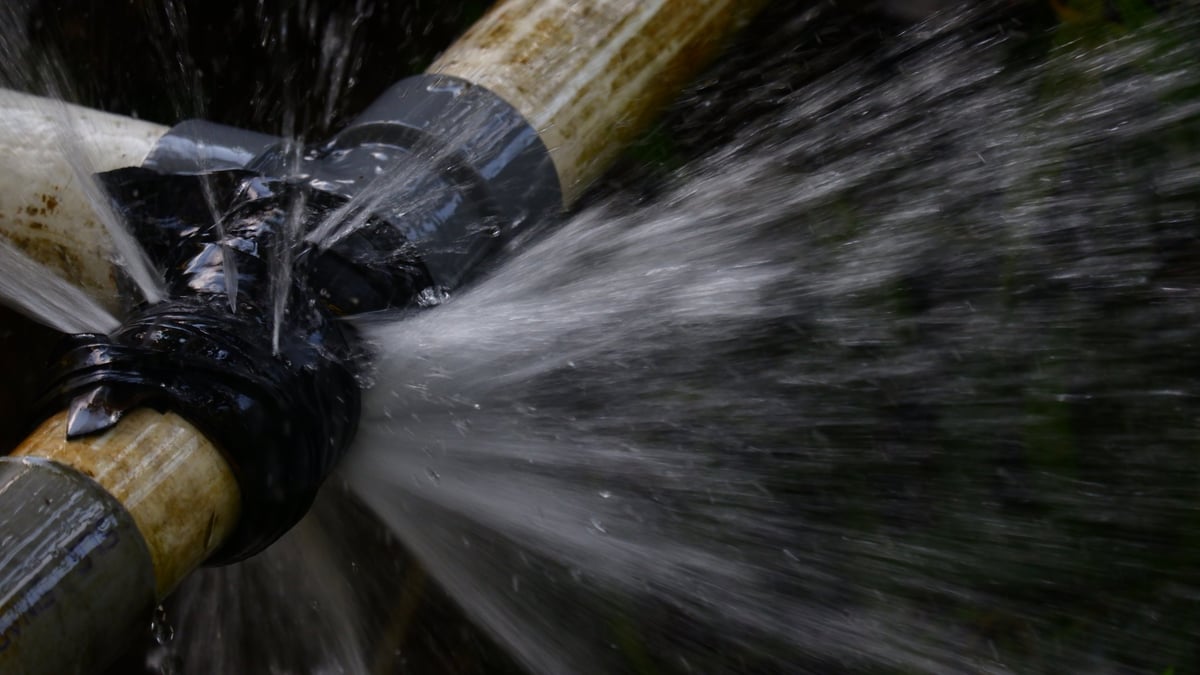
What causes a burst pipe?
Pipes rarely fail without a reason. The vast majority of burst pipes we attend in Bedfordshire, Hertfordshire, Buckinghamshire and North London fall into one of a handful of categories.
| Cause | What happens | Typical location |
|---|---|---|
| Frozen water | Ice expands and splits the pipe, which then gushes when it thaws | Lofts, garages, external runs |
| Corrosion | Old metal pipework weakens from the inside over many years | Older homes, under floors |
| High pressure | A sudden surge in mains pressure stresses weak joints | Any main-fed pipe |
| Poor fitting | Bad joints or DIY work fail under normal use | Recent installations |
Frozen pipes are the number one cause in winter
The most common cause of a genuine burst in the UK is freezing. When water freezes it expands by roughly nine per cent, and that pressure is enough to split even modern copper or plastic pipe. Often the split happens silently while the water is still ice, and the damage only becomes obvious when the thaw releases a full-pressure leak. The pipes most exposed to this are in unheated lofts, garages and outbuildings, which is why insulating exposed pipework before winter is the single most effective prevention measure you can take.
What should you do first if a pipe bursts?
When water is pouring into your home, the instinct is to panic. If you follow these steps in order you will dramatically limit the damage while help is on the way.
- 1Turn off the water at the stopcock. Your internal stopcock is usually under the kitchen sink, in a downstairs cupboard or at the point the mains enters the property. Turn it clockwise as far as it will go.
- 2Drain the system. Turn on every cold tap and flush the toilets to empty the pipes and reduce pressure at the leak.
- 3Switch off the central heating. If the leak is on the heating system, turn the boiler off and stop the radiators circulating water through the damaged section.
- 4Cut the electricity. If water is anywhere near sockets, light fittings or the consumer unit, switch off the mains supply. Never touch electrics standing in water.
- 5Contain and call. Catch what you can in buckets, move belongings out of harm's way, then call a plumber who handles burst pipe repair on an emergency basis.
How do I find my stopcock in an emergency?
If you do not know where your stopcock is, do not waste precious minutes searching while a pipe pours water. The most common locations are under the kitchen sink, in a downstairs toilet, a hallway cupboard, or just inside the front door where the mains enters. If you genuinely cannot find it, you can shut off the water at the outside boundary stopcock, which is usually under a metal cover in the pavement or drive with the word "water" or "W" embossed on it. Knowing this in advance, and labelling your internal stopcock, is one of the simplest steps you can take to be ready for a burst pipe.
Burst pipe vs leaking pipe: what is the difference?
A leaking pipe seeps or drips steadily, often behind a wall or under a floor, and may go unnoticed for weeks until a stain appears. A burst pipe is a sudden, full failure where water releases at pressure in a very short time. Both need a professional, but a burst is a time-critical emergency because the volume of water is so much greater. If you spot a damp patch, a stain on a ceiling, or an unexplained jump in your water bill, that is often an early leak rather than a burst, and leak detection can find it before it becomes catastrophic.
When should I call an emergency plumber for a burst pipe?
You should call an emergency plumber as soon as you have shut the water off and made the area safe. A burst pipe is always a job for a qualified professional, not a DIY attempt under stress. If the burst happens at night, at the weekend or on a bank holiday, that is exactly what a 24 hour plumber service exists for. While you wait, keep the stopcock off, keep buckets under the leak, and avoid using taps or flushing toilets that feed the damaged section.
Frequently asked questions about burst pipes
Does home insurance cover a burst pipe?
Most buildings insurance policies do cover escape of water, but you must act to limit the damage by turning the water off promptly. Check your policy wording and contact your insurer as soon as practical with photos of the damage.
How long does it take to fix a burst pipe?
A straightforward accessible burst is often repaired within an hour or two. If the pipe is buried in a wall, floor or ceiling, locating and accessing it takes longer, which is why stopping the water first is so important.
Can I repair a burst pipe myself with tape or a repair clamp?
A temporary repair clamp or pipe wrap can slow a leak short-term, but it is not a permanent fix. A split pipe stays a weak point until the damaged section is properly replaced by a qualified plumber.
Dealing with a burst pipe right now?
Stop the water at the stopcock, drain the system, then call us. Our engineers respond to burst pipe emergencies across Bedfordshire, Hertfordshire, Buckinghamshire and North London.